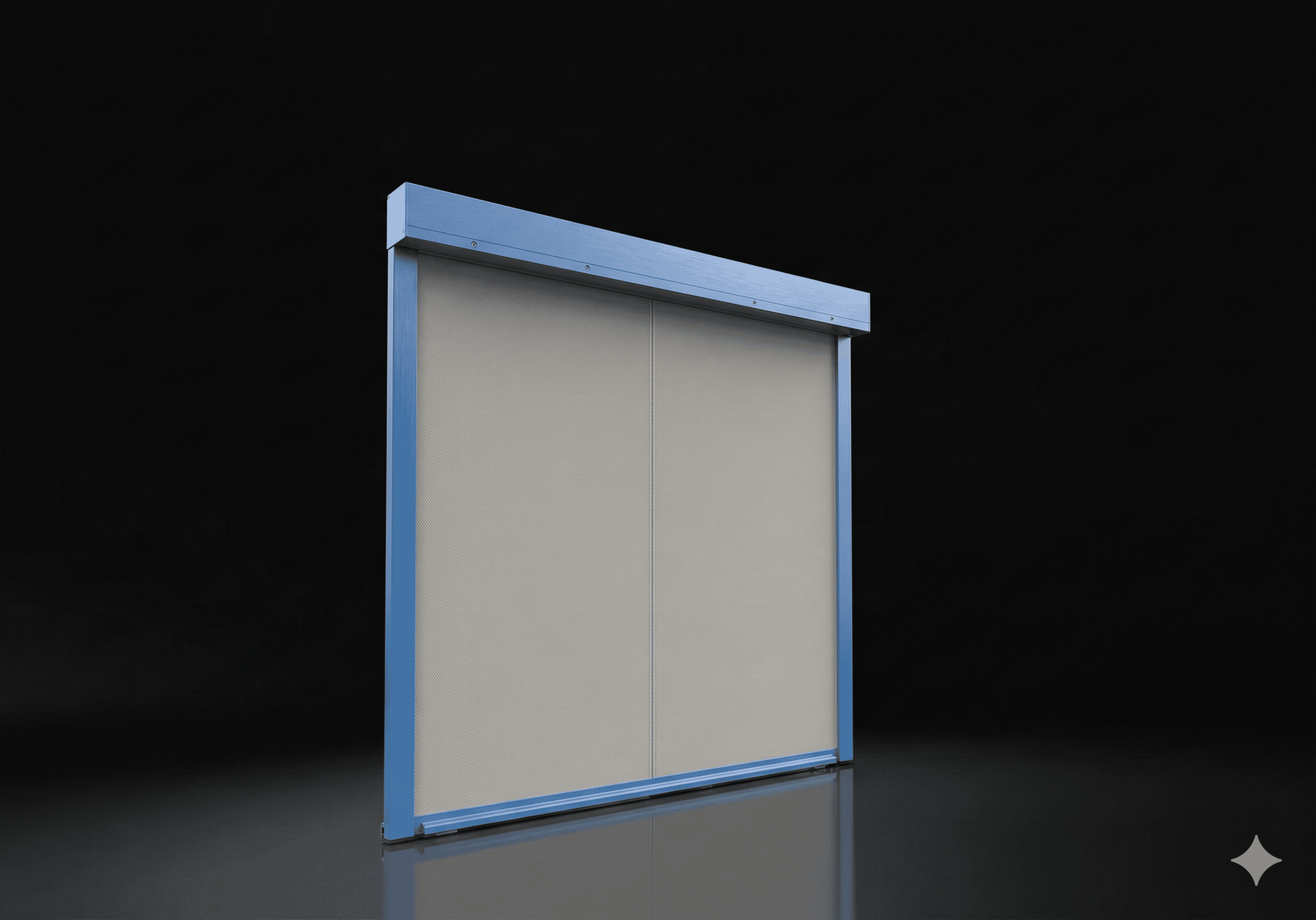

Description
UL Standards and Classifications
- UL 555 (Fire Dampers): Measures the ability of a damper to block flames under specific thermal conditions. They are typically activated by a fusible link that melts at a set temperature (often 165°F to 286°F), allowing the blades to close.
- UL 555S (Smoke Dampers): Assesses air leakage resistance and actuator function during fire events. They are motorized and respond to signals from smoke detectors or building control systems.
- Combination Dampers (UL 555 & UL 555S): Integrated assemblies that provide both fire resistance and smoke containment in one unit.
- UL 555C (Ceiling Radiation Dampers): Specifically for use in fire-rated floor/ceiling or roof/ceiling assemblies
Key Performance Ratings
- Fire Rating: Commonly available in 1.5-hour and 3-hour durations, which must match or exceed the rating of the barrier they penetrate.
- Leakage Class: Smoke and combination dampers are rated by leakage (Class I, II, or III), with Class I being the most stringent (lowest leakage).
- Static vs. Dynamic: Static dampers are for systems that shut down during a fire, while Dynamic dampers are tested to close against active airflow and pressure