
Description
How Foam Suppression Systems Work
- Mechanism: The foam blanket separates the fuel from the oxygen, cools the fuel, and suppresses the release of flammable vapors.
- Components: The system consists of a foam concentrate storage tank, a proportioning device (which mixes the foam and water), a water supply, and discharge devices such as sprinklers, monitors, or nozzles.
- Activation: The system is triggered (often by a deluge system) upon detection of a fire, rapidly releasing the foam over the hazard area.
Types of Foam Systems
Systems are classified based on the expansion ratio of the foam:
Systems are classified based on the expansion ratio of the foam:
- Low Expansion (2:1 to 20:1): Highly fluid, ideal for forming a blanket over large, open flammable liquid surfaces like tank farms.
- Medium Expansion (20:1 to 200:1): Creates a thick, ~2-foot blanket for vapor suppression, suitable for confined areas.
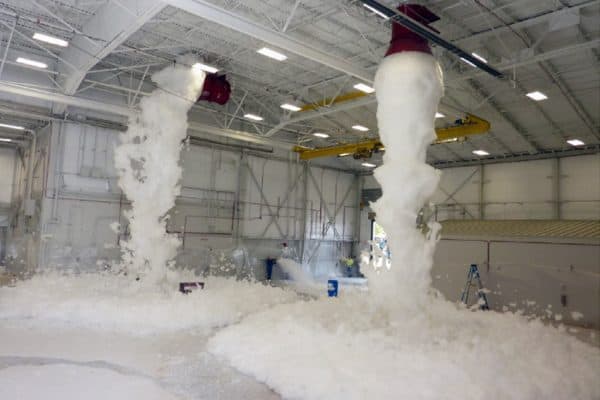
- High Expansion (200:1 to 1000:1): Produces large volumes of light, airy foam to fill entire rooms or enclosures (total flooding), such as in airplane hangars
Clean Agent Gases:
- FM-200 (HFC-227ea)
- Novec 1230
- lnergen (IG-541)
- CO2(CarbonDioxide
Key Applications
- Aircraft Hangars & Airports: For controlling fuel spills and protecting against jet fuel fires.
- Petrochemical Plants & Refineries: For storage tanks and processing areas.
- Warehouses: Especially those with flammable liquid storage.
- Marine & Offshore Platforms: For engine rooms and loading docks.
- Power Generation & Substations: For protecting against oil-based fires.
- Data Centers
- Telecommunications Facilities
- Electrical Switchgear / Control Rooms